Effective in-plant hygiene masures are critical to food safety. Scotmas provide a number of powerful, highly effective biocidal treatment that are designed to destroy harmful bacteria wherever they may reside in the plant.

Whorking in a variety of areas of the preocessing plant, from carcass washing through to chillier water disinfection and hand hygiene, Scotmas can provide highly effective biosecurity solutions.


Transmission

The majority of cases of Campylobacter infection are sporadic, with common source outbreaks, usually from contaminated water or milk 3, accounting for less than one percent of the total reports in England and Wales during 1993. Consumption of contaminated food, especially undercooked poultry meat has been implicated as the most important source of the enteric disease (campylobacteriosis)

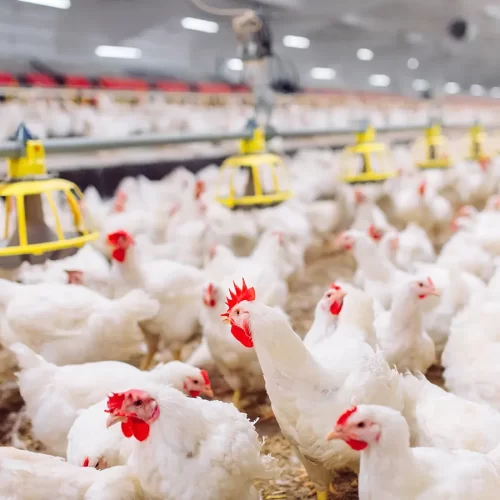
The high temperature optimum of many species of Campylobacter shows that the organism has a particular affinity for poultry, where it is commonly found in the gut, and on the skin of slaughtered carcasses. The slaughter and evisceration process unavoidably disseminates the bacteria onto the carcass surface, and the abattoir equipment. During processing, the skin of the carcass is broken with meat hooks and equipment, allowing further, deeper contamination of the pathogen. The carcass scalding and washing process also poses a risk, by allowing organisms to be transmitted from one carcass to another, via the wash water and equipment used. The detection and elimination of the organism in the food processing environment is complicated further by the lack of a reliable and accessible rapid detection technique for C. jejuni in the field. Campylobacter has been isolated from 38% of chickens on sale in major UK supermarkets, and media concern over this has increased in recent times.

Detection

The ability to enter a Viable non Culturable (VNC) state upon exposure to extreme stress also means that Campylobacter can exist undetected in hostile environments for some considerable time. Increased resistance to disinfectant activity by cells in the VNC state, in comparison to culturable cells in solution has also been reported 1. Through a better understanding of the physiology of Campylobacter jejuni cells responding to a variety of environmental stresses, better sterilisation and food hygiene techniques can be developed in order to protect against the transmission of this organism.


Response to Disinfectants

Due to the potential for C. jejuni to enter a VNC state, which affords the organism increasing resistance to disinfectants, increasing amounts of work  are being done to determine stress responses to various disinfectants.

Internal results currently show that a 3 - 5ppm chlorine dioxide dose is seen to achieve a 3 log reduction in count of a 25 hour suspension of C. jejuni grown in Brucella broth and transferred to phosphate buffered saline immediately prior to disinfection